Inside & beyond the Palace
Six Versailles experiences worth planning your visit around
The strongest Versailles visit combines the ceremonial Palace with the landscape beyond it. These six stops show very different sides of royal life, from public displays of power to private retreats away from court.
01
Palace essential
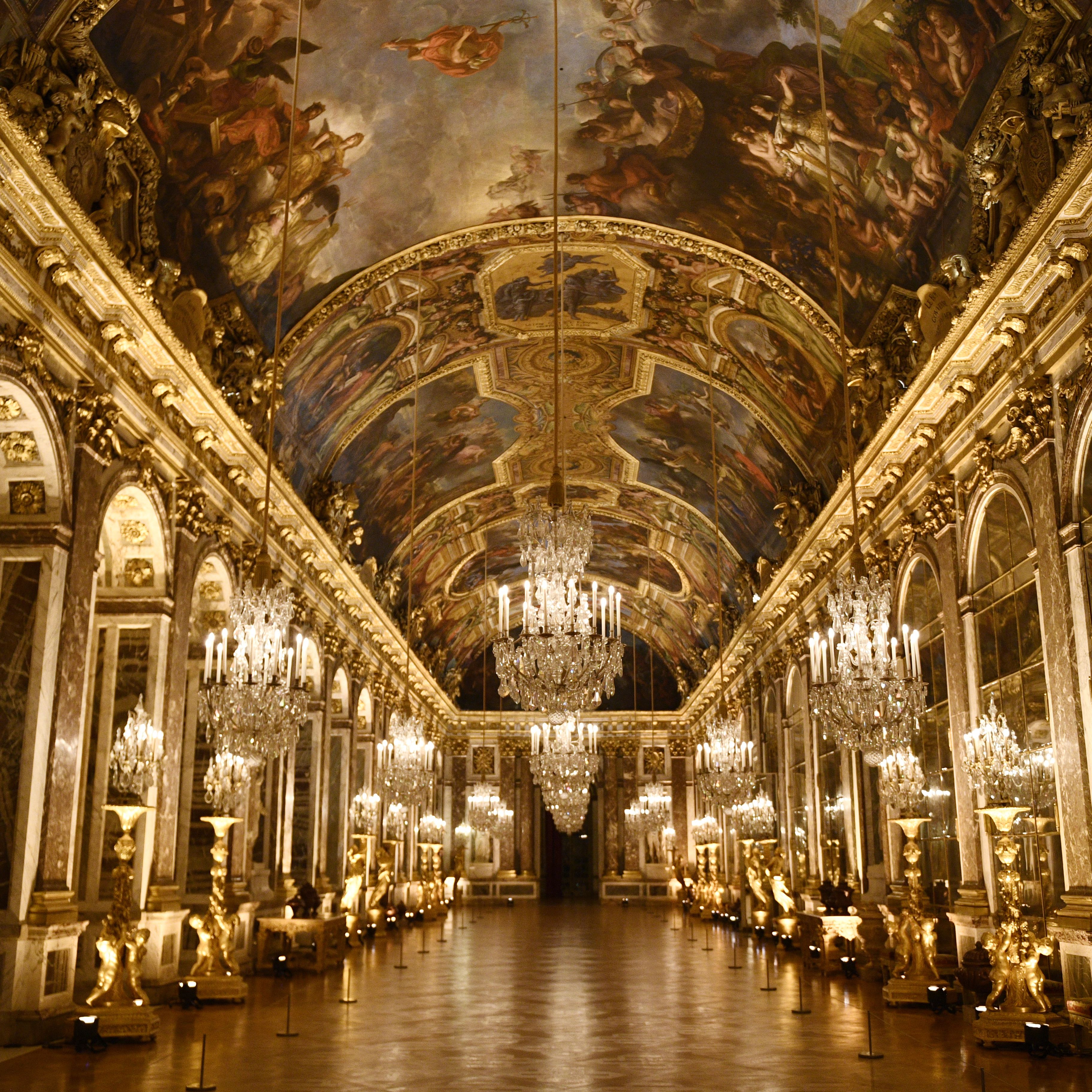
Walk through the Hall of Mirrors
The Hall of Mirrors is the Palace’s most famous interior: a 73-metre gallery where mirrors face the garden windows and gilded decoration, paintings and chandeliers create Versailles’ defining ceremonial space.
Do not miss
Turn toward the windows as well as the mirrors — they line up with the Gardens and the Grande Perspective stretching toward the Grand Canal.
02
Royal interiors
Follow the State Apartments instead of rushing between rooms
The Palace interiors make more sense as a sequence. Ceremonial rooms were designed not simply as private living spaces but as stages for court life, royal ritual and the image of the monarchy.
Look beyond the décor
Notice how the scale and function of the rooms change as you move through the royal apartments toward the Palace’s major ceremonial spaces.
03
Garden masterpiece
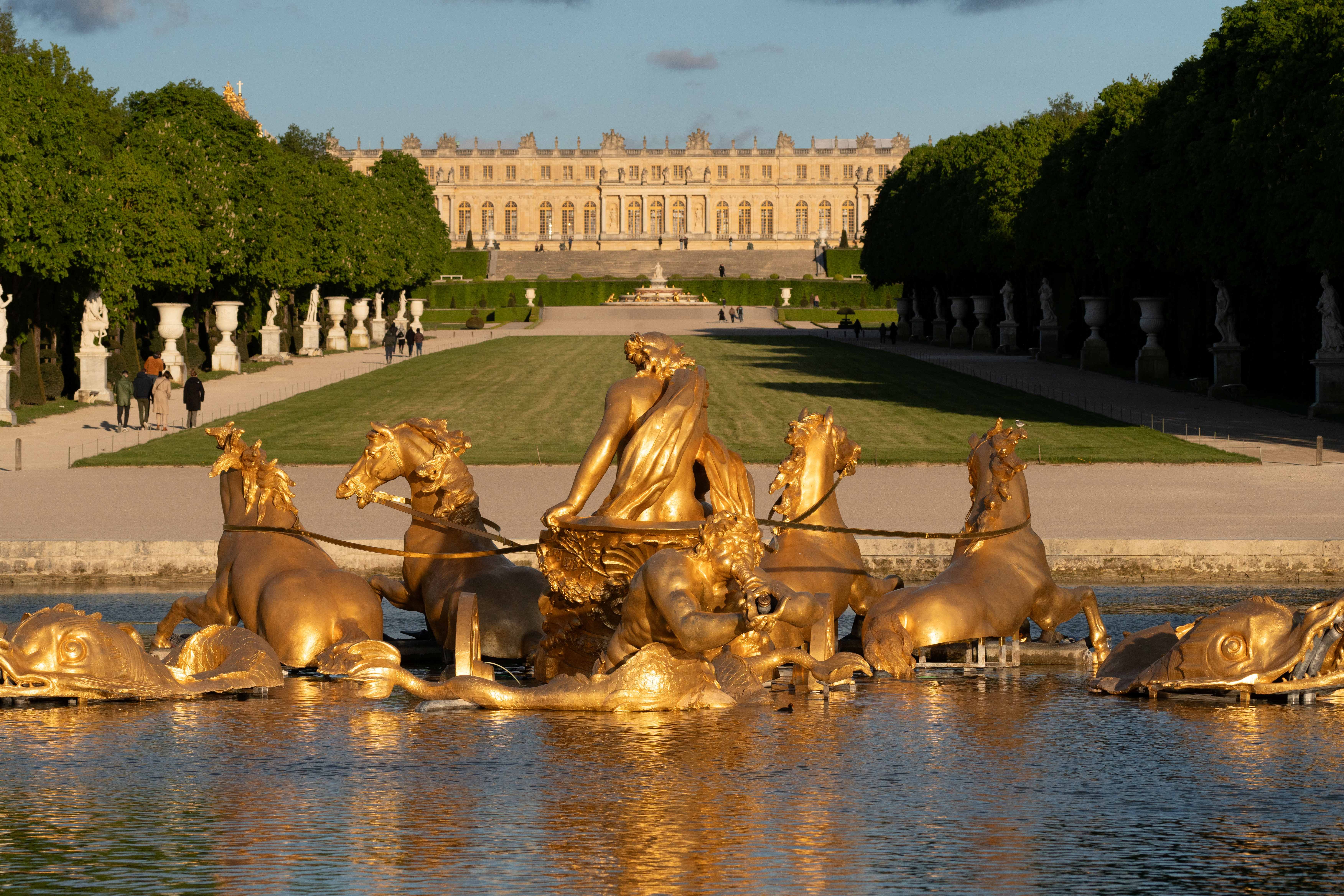
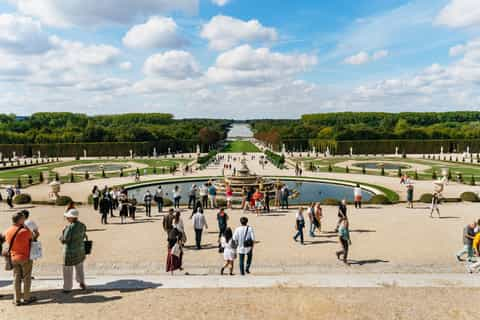
Follow André Le Nôtre’s Grande Perspective
The Gardens were conceived as an extension of the Palace rather than a separate park. Formal parterres, straight axes, sculpture, fountains and carefully controlled sightlines stretch west from the building.
Best approach
Start close to the Palace, then look back as you descend. The relationship between architecture and landscape becomes clearer with distance.
04
Fountains & groves
Go beyond the central lawns into the garden groves
Some of the Gardens’ most interesting spaces are hidden from the main axis. The groves were designed as enclosed outdoor rooms, creating a contrast with the long open perspectives around them.
Good to know
Musical Fountains and Musical Gardens operate on selected dates, so check the calendar if seeing fountains in action matters to you.
05
Landscape scale
Walk toward the Grand Canal to understand the size of Versailles
The Grand Canal extends the main east-west axis far beyond the formal flowerbeds. At 1,670 metres long, it gives the estate an entirely different scale once you reach the lower part of the Gardens and Park.
Why go farther
The Palace feels very different when viewed back across the long axis rather than from the courtyards immediately outside it.
06
Royal retreat
Continue to Trianon and Marie-Antoinette’s Hamlet
The Grand Trianon, Petit Trianon and Queen’s Hamlet reveal a more intimate side of Versailles. These spaces were associated with retreat from the rigid ceremonial life centred on the main Palace.
Worth the extra time
The contrast is the reason to go: formal monarchy at the Palace gives way to smaller residences, landscaped gardens and the rustic Queen’s Hamlet.