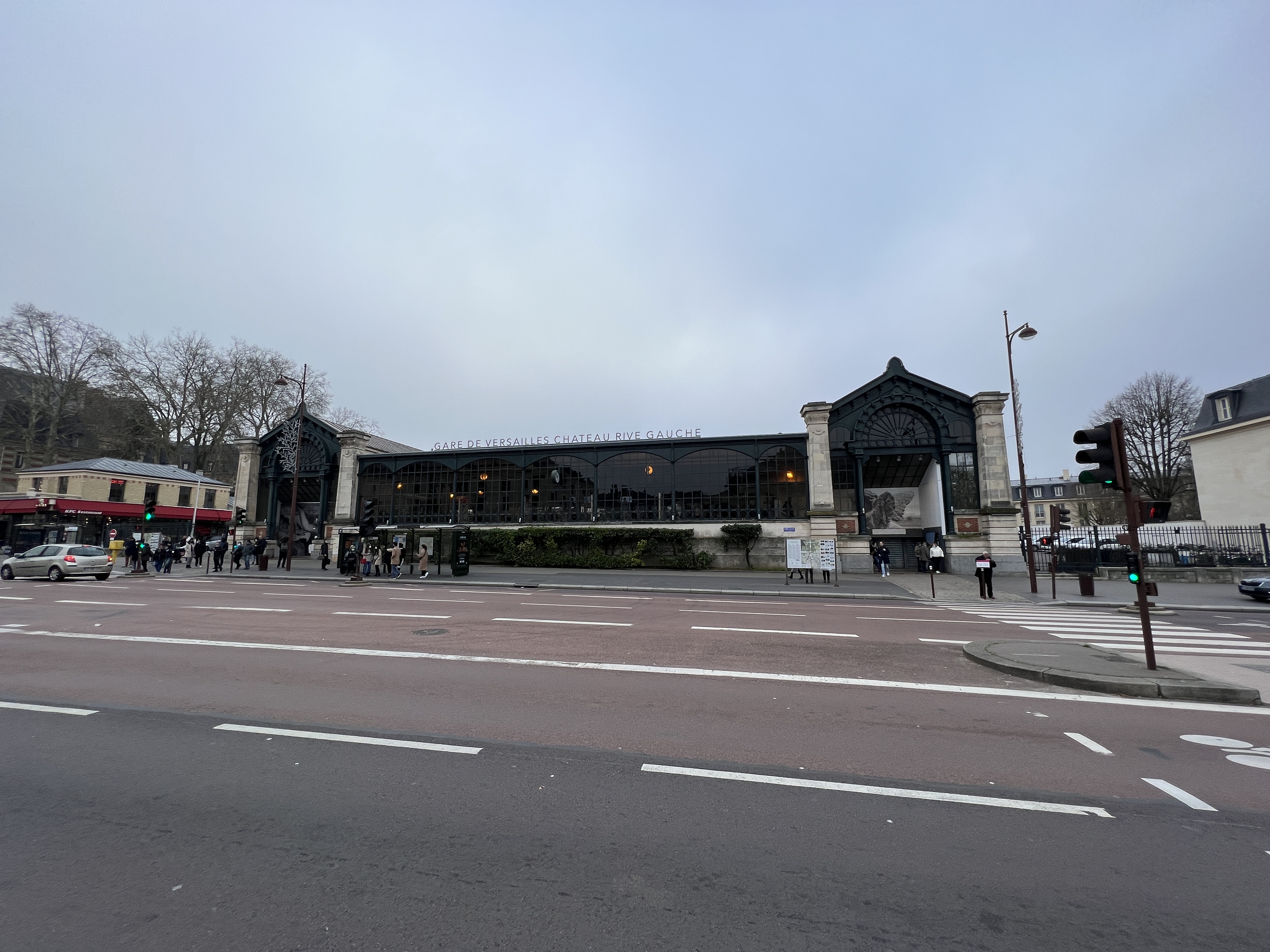
Versailles Château Rive Gauche
The closest railway station to the Palace and the one most commonly associated with a first-time trip from central Paris.
Versailles is outside central Paris, but reaching the Palace is straightforward once you choose the station that matches where you are staying. Compare the RER C, trains from Montparnasse or Saint-Lazare, bus 171, driving and transfer options — then see exactly what happens after you arrive in Versailles.
There is no single train that is best from every part of Paris. Choose according to your starting point rather than travelling across Paris just to use the RER C.
For many visitors staying near the Seine, Eiffel Tower, Saint-Michel or another convenient RER C connection, this is the easiest route because it leaves you closest to the Palace.
Paris and Versailles are connected by several different rail routes. The most convenient one depends heavily on where you begin.
If you are already near Gare Montparnasse, travelling to Versailles Chantiers can make more sense than crossing Paris to reach the RER C. From Saint-Lazare, Versailles Rive Droite provides another straightforward option.

All three stations are practical for visiting the Palace. The main difference is which Paris railway line reaches them and how far you walk after arriving.
The closest railway station to the Palace and the one most commonly associated with a first-time trip from central Paris.
A very practical alternative when your Paris accommodation or route is convenient to Gare Montparnasse.
Often the logical rail choice for visitors approaching Versailles through Paris Saint-Lazare or the north-western side of the Paris network.
An extra seven or eight minutes of walking in Versailles can be quicker than making additional Metro changes inside Paris. Check the entire journey from your actual starting point before choosing a station.
Use this table as a route decision tool rather than automatically choosing the station with the shortest walk.
| Versailles station | Main Paris connection | Walk to Palace | Useful when | Main advantage |
|---|---|---|---|---|
| Versailles Château Rive Gauche Closest rail station | RER C | About 10 min | Your Paris route connects easily with the RER C | Shortest walk to the Palace |
| Versailles Rive Droite North-west approach | From Saint-Lazare / Transilien network | About 17 min | You are near Saint-Lazare or a convenient connecting route | Can avoid unnecessary travel across Paris |
| Versailles Chantiers Major Versailles station | From Gare Montparnasse | About 18 min | Montparnasse is convenient from your accommodation | Straightforward alternative to RER C |
Thinking in terms of your nearest major rail corridor is usually more useful than following a generic “Paris to Versailles” instruction.
If Champ de Mars–Tour Eiffel or another convenient RER C station is easy to reach, Versailles Château Rive Gauche is normally the most natural destination.
Saint-Michel–Notre-Dame provides access to the RER C corridor, making the closest Versailles station a practical choice from this part of central Paris.
If Gare Montparnasse is already convenient, the direct rail route to Versailles Chantiers can be easier than making extra changes simply to reach an RER C station.
Travellers based near Gare Saint-Lazare can use the Transilien route to Versailles Rive Droite and walk the remaining distance through Versailles.
One of the easiest mistakes is assuming the same ticket used for a short central-Paris journey automatically covers every rail journey to Versailles.
The official Palace guidance recommends buying outbound and return transport for the route between your departure point and your chosen Versailles station, or using an eligible transport pass that covers the journey.
The official Palace specifically warns that a basic T+ ticket is not valid for the rail journey to Versailles.
Fare systems and travel products can change, so check your exact journey in the Île-de-France Mobilités, SNCF Connect or Transilien journey planner before travelling.
Rail is convenient for many visitors, but it is not the only option. Your accommodation, mobility needs and tolerance for navigating public transport can make another route more sensible.
RATP bus 171 links Pont de Sèvres — the western terminus of Metro line 9 — with the Palace of Versailles. The Palace lists roughly 30 minutes for the bus ride in traffic-free conditions.
The official driving route from Paris uses the A13 toward Versailles, with exit 5 for Versailles Centre. Paid parking is available at Place d’Armes directly in front of the Palace.
A transfer-inclusive tour can make sense if avoiding rail planning matters more than travelling independently, particularly for families or visitors with a tightly structured Paris itinerary.
Traffic approaching Versailles, parking costs and temporary road works can remove the apparent convenience of a car. Check current traffic conditions on the day and compare them with public transport before leaving Paris.
Your transport journey ends in the town of Versailles. You still need to walk to Place d’Armes and enter the Palace complex at the correct visitor entrance.
Follow station signs to street level and confirm the Palace direction before starting your walk.
All three main stations ultimately bring you toward Place d’Armes, the large open square immediately in front of the Palace gates.
Individual visitors with tickets normally proceed into the Main Courtyard and follow the current Palace entrance signage.
Walking distance matters more at Versailles than it does at many urban attractions, so the final approach should be part of your route decision.
The Palace provides specific parking and drop-off arrangements for visitors with disabilities upon presentation of the required proof.
Versailles Château Rive Gauche has the shortest official walking distance of the three major railway stations used for Palace visits.
However, individual accessibility needs differ, so check the current station accessibility status as well as the Palace’s own access arrangements before travelling.
Most route problems happen before visitors ever reach the Palace. These four checks solve the common ones without adding unnecessary complexity.
The RER C has branches. Confirm that your train serves Versailles Château Rive Gauche before getting on.
If Montparnasse or Saint-Lazare is already convenient, their routes can be easier even though the final walk is slightly longer.
Leave enough time after your train arrives for the walk through Versailles and the Palace entry process.
Check evening rail schedules and service updates earlier in the day, particularly when engineering works or disruptions are reported.
A Versailles option with transport from Paris can be useful when convenience matters more than travelling independently.