07 · In depth
How to understand Versailles while you explore it
Versailles makes more sense when you stop thinking of it as one enormous palace and start seeing it as a carefully designed sequence. The rooms, windows, gardens and distant Trianon estate were all created to communicate different ideas about royal power, ceremony and private life.
The most rewarding way to see Versailles is to notice how each part changes the story — from public display inside the Palace to privacy at Trianon.
The Hall of Mirrors was designed to impress, not simply decorate
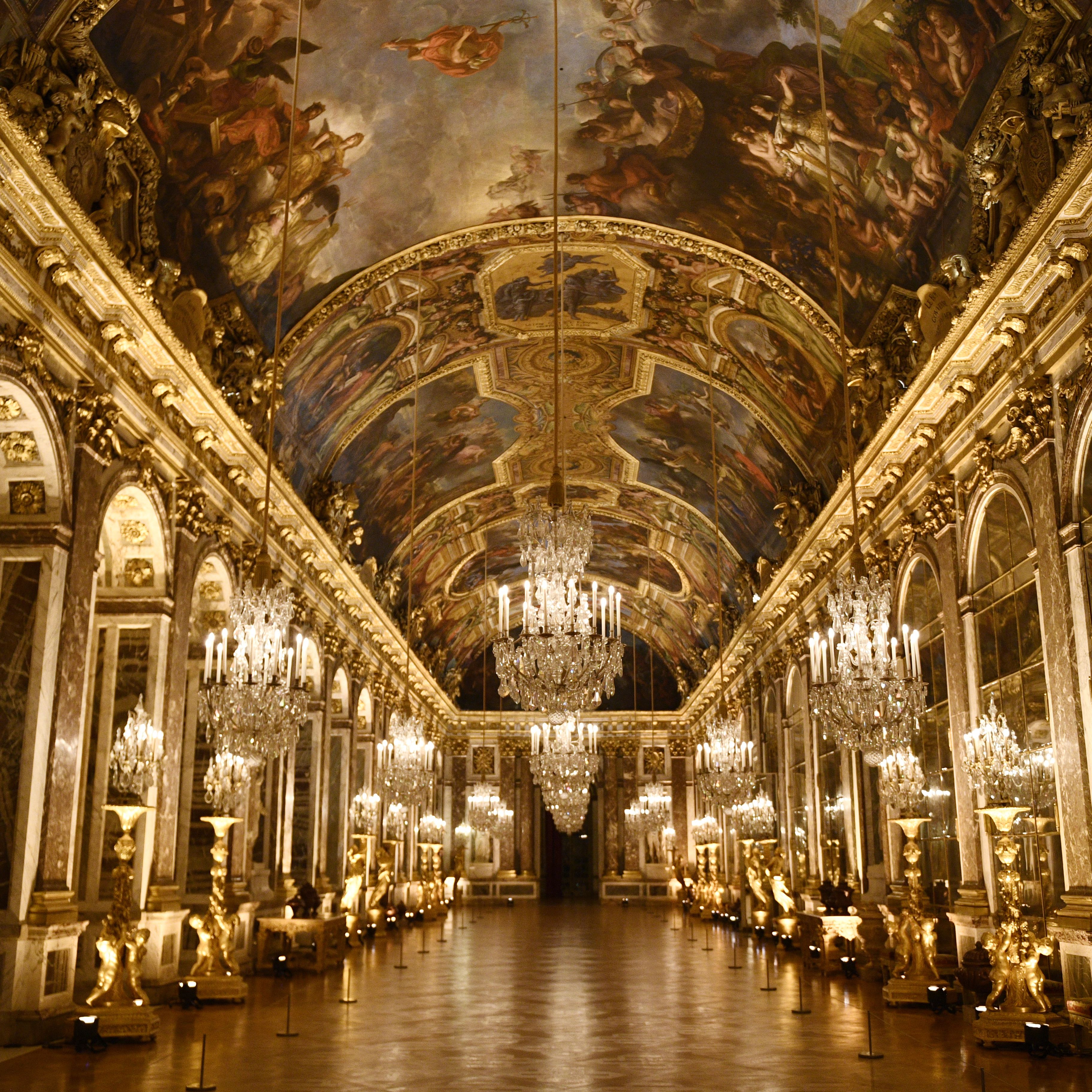
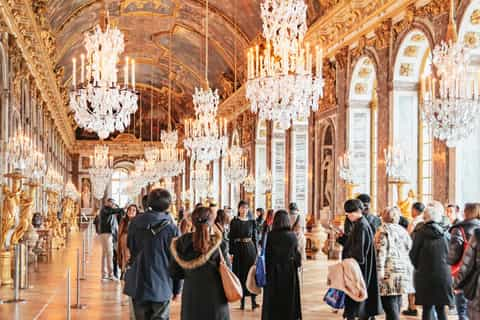
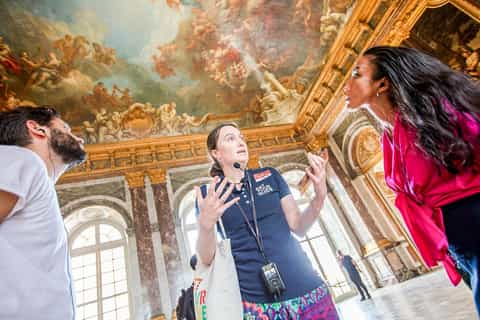
The Hall of Mirrors is 73 metres long and contains 357 mirrors facing the garden windows. Its ceiling paintings celebrate the political and military achievements of Louis XIV, while the mirrors themselves demonstrated France’s ability to rival Venetian glassmaking.
Look beyond the chandeliers and gilding: the room was effectively a statement about French power, wealth and artistic ambition. It was also used as a passageway for courtiers and as a ceremonial setting for major diplomatic receptions. :contentReference[oaicite:1]{index=1}
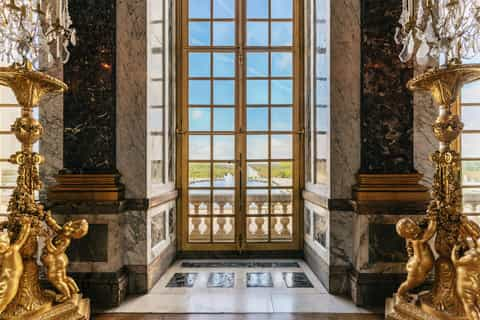
Turn toward the windows in the Hall of Mirrors
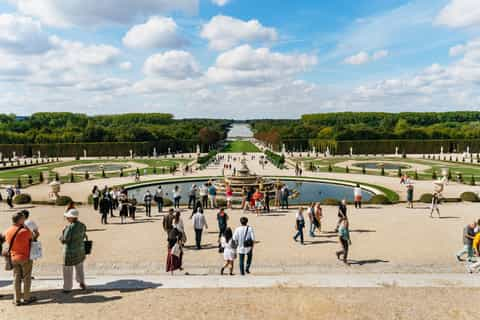
One of the easiest details to miss is directly outside. From the centre of the gallery, the windows line up with the Grande Perspective stretching through the Water Parterre, Royal Way and toward the Grand Canal.
André Le Nôtre expanded this east-west axis so the Palace and Gardens work visually as one composition. The Gardens are therefore not simply decoration behind the building — they continue the architecture far into the landscape. :contentReference[oaicite:2]{index=2}
The Gardens were designed as controlled scenery
The formal symmetry, long avenues, fountains and carefully framed views were deliberate. Louis XIV considered the Gardens important enough that work on them developed alongside the Palace for decades.
As you move away from the central axis, notice how open perspectives alternate with more enclosed groves. That contrast is part of the design: Versailles continually shifts between grand public views and smaller, more intimate spaces. :contentReference[oaicite:3]{index=3}
Trianon changes the mood completely
The Grand Trianon, Petit Trianon and Queen’s Hamlet feel very different from the main Palace because they served a different purpose. They were associated with the royal family’s more private life away from the formality and constant observation of the court.
The official Versailles interpretation describes Trianon as a place created to escape the constraints of court life. That contrast is one of the most interesting parts of a full-estate visit: the grandeur of the main Palace makes much more sense after seeing where royalty went to get away from it. :contentReference[oaicite:4]{index=4}
One simple way to read the estate
The Palace represents ceremony and public power. The Gardens extend that control into the landscape. Trianon represents retreat and private life.
Seeing Versailles through those three ideas turns the visit from a sequence of beautiful rooms into a much clearer story about how the French monarchy presented itself — and how royal life changed as you moved farther away from the centre of court.