Versailles Palace ToursTickets & Tours
Versailles · 1620s to the present

Palace of Versailles History & Visitor Information

Versailles has lived several lives: a royal retreat, the headquarters of Louis XIV’s government, the final home of the monarchy before the Revolution, a national history museum, a parliamentary centre and the setting for two major moments in European diplomacy. This guide explains those layers so the Palace makes more sense when you visit.

Royal origins Louis XIII · 17th century
Government moves here 6 May 1682
National museum opens 10 June 1837
Peace treaty signed 28 June 1919
The story in sequence

Six turning points that changed the meaning of Versailles

Versailles was not created in one moment. Its purpose changed repeatedly, and understanding those shifts explains why royal apartments, national-history galleries and political spaces now exist inside the same complex.

01 Louis XIII

The story started with a much smaller royal residence

Long before Versailles became a symbol of absolute monarchy, Louis XIII used the area as a hunting retreat and established the royal residence from which the later Palace developed.

What survived The central part of the Palace still preserves the footprint and architectural memory of the earlier château beneath Louis XIV’s later expansion.
02 1660s–1680s

Louis XIV turned a residence into a political machine

Under Louis XIV, building campaigns transformed Versailles on a huge scale. Architecture, decoration, gardens, government offices and accommodation for the court developed together.

The key idea Versailles was not simply designed to impress visitors. It also created a physical system in which access to the king, status and court ceremony could be carefully organised.
03 6 May 1682

Versailles became the headquarters of royal government

On 6 May 1682, Versailles became the headquarters of government. Paris remained France’s official capital, but Versailles became the effective centre of political power and court life.

Why the date matters This is the moment Versailles stopped functioning mainly as a royal residence and became the operating centre of the kingdom.
04 1789

The Revolution broke the link between Versailles and royal government

In October 1789, the royal family left Versailles for Paris. The Palace had lost the political society for which its ceremonial rooms, apartments and court routines had been built.

What changed afterward Versailles survived, but it had to find a new purpose. Its later story became increasingly about national memory rather than royal residence.
05 10 June 1837

Louis-Philippe reinvented Versailles as a museum of France

King Louis-Philippe transformed large parts of the former royal residence into a museum dedicated to the history of France. The Historic Galleries opened in 1837.

Look for this layer The Gallery of Battles and other history galleries belong to this nineteenth-century reinvention, not to Louis XIV’s original royal Palace.
06 1871–1919

Versailles became a stage for European politics again

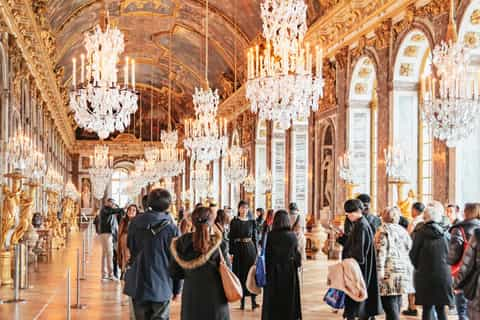
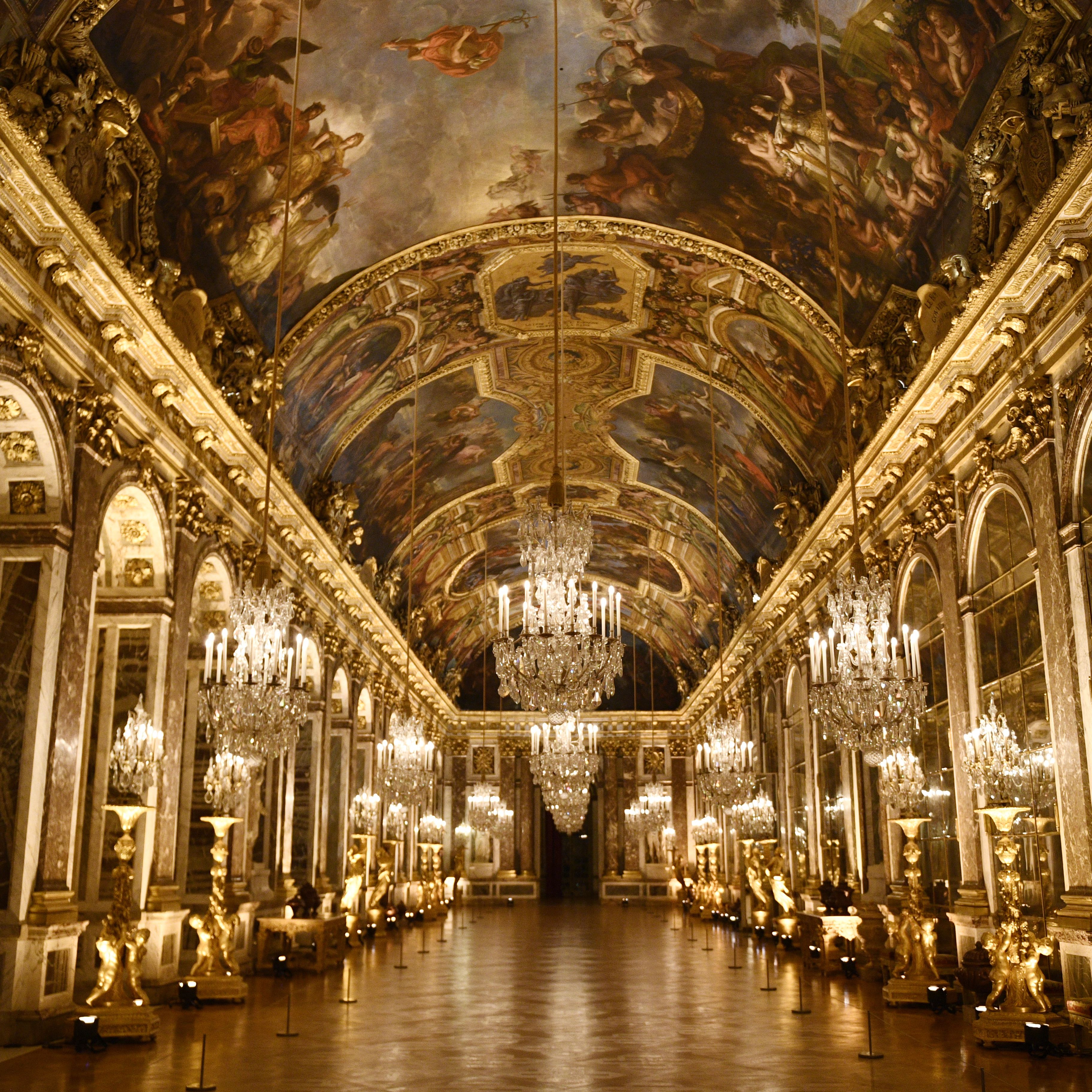
The German Empire was proclaimed in the Hall of Mirrors on 18 January 1871. Forty-eight years later, the Treaty of Versailles was signed in the same room on 28 June 1919.

Why this is remarkable A gallery created to celebrate Louis XIV’s monarchy later became the setting for two defining moments in modern European history.
!
Not every room you see belongs to the same version of Versailles.

Some spaces preserve royal court life, while others were redesigned in the nineteenth century to tell a national history. Recognising those layers prevents the Palace from becoming one long sequence of decorated rooms.

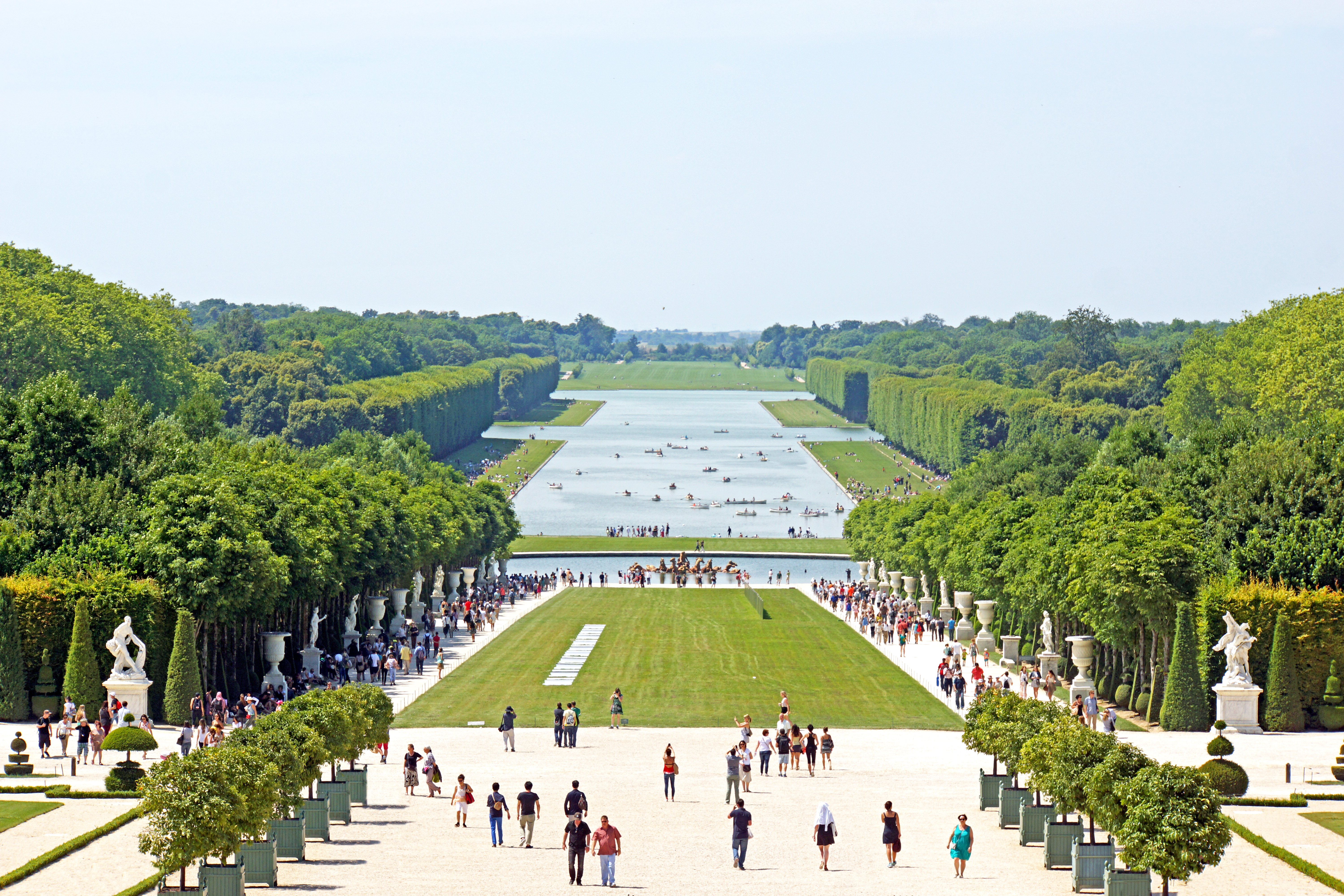
Formal gardens and long perspective at the Palace of Versailles
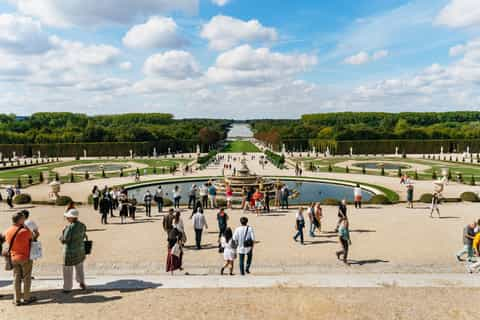
Versailles was designed on a scale much larger than the Palace building. Royal architecture, formal gardens and long landscape axes formed one political and visual environment rather than separate attractions.
Behind the decoration

How power actually worked at Louis XIV’s Versailles

The most useful historical context is not a list of kings. It is understanding why thousands of people wanted access to Versailles and why seemingly ordinary court routines could carry political importance.

Access & hierarchy

Being near the king was a political advantage

Court life was organised through rank, privilege and access. Who could enter particular rooms, attend ceremonies or approach the monarch helped communicate a person’s status.

  • Access was not equal across the Palace.
  • Royal routines involved carefully ranked participants.
  • Physical proximity could reinforce political influence.
Daily court life

The king’s routine became part of government

Activities that would normally be private could become formal court occasions. The monarchy turned daily royal life into repeated ceremonies witnessed by selected members of the court.

  • Morning and evening routines followed etiquette.
  • Court attendance created opportunities for access.
  • Ceremony reinforced rank and dependence on the monarch.
Architecture

Rooms controlled movement

Doorways, sequences of apartments and levels of access helped transform architecture into part of the court hierarchy.

Image

Art carried political messages

Paintings and decoration repeatedly associated the monarchy with military victory, order, classical mythology and national prestige.

Audience

Versailles was meant to be seen

Ceremony worked because other people witnessed it. Display was therefore an essential part of how royal authority was communicated.

A second Versailles

What happened to the Palace after the kings left

The story after 1789 is often skipped, yet it explains why Versailles today is simultaneously a restored royal residence, a national museum and a political monument.

01 1830s

Louis-Philippe chose not to move back into Versailles

When Louis-Philippe became king in 1830, he did not intend to restore Versailles as his royal residence. Instead, he planned a museum devoted to France’s national history.

Purpose The project was intended both to educate visitors and to encourage reconciliation after decades of revolutionary and political upheaval.
02 1837

The Palace opened a new chapter as a public history museum

The Museum of the History of France was inaugurated on 10 June 1837 and dedicated “to all the glories of France.”

What visitors inherited The Palace’s current collections still reflect this double identity: former royal residence and museum of French history.
03 1871

The Hall of Mirrors witnessed the birth of the German Empire

Following France’s defeat in the Franco-Prussian War, the German Empire was proclaimed at Versailles on 18 January 1871 in the Hall of Mirrors.

The symbolism The ceremony deliberately took place beneath decorations celebrating the military achievements of Louis XIV’s France.
04 1919

The same room hosted the post-war settlement with Germany

On 28 June 1919, German representatives and the Allied powers signed the Treaty of Versailles in the Hall of Mirrors after the First World War.

Historical reversal The setting intentionally echoed 1871: a room used for German unification now hosted Germany’s signing of the peace settlement.
While you are inside

Four clues that help you identify which Versailles you are seeing

Instead of trying to remember dozens of dates, use these visual clues to distinguish royal Versailles from the later museum and political history added after 1789.

Royal residence

Rooms built around ceremony

State apartments, royal bedrooms and ceremonial galleries belong to the environment created for monarchy and court life.

1837 museum

Large historical painting galleries

Rooms such as the Gallery of Battles reflect Louis-Philippe’s nineteenth-century plan to narrate French national history through art.

Modern history

Look for events beyond the monarchy

The Hall of Mirrors has meanings connected not only with Louis XIV, but also with 1871 and the peace settlement of 1919.

An easy way to remember it

Think of Versailles as three historical layers

LAYER 01 Royal Versailles

The monarchy, court ceremonies, royal apartments and political world centred on the king.

LAYER 02 National museum

Louis-Philippe’s nineteenth-century attempt to turn the former royal residence into a history of France open to the public.

LAYER 03 European political stage

Versailles as the setting for the German Empire’s proclamation, French parliamentary history and the Treaty of 1919.

Use the history on your visit

Which type of visit makes sense if history is your priority?

The best format depends less on how many rooms you want to cover and more on how much explanation you want while you are inside them.

Independent visitors

Use an audioguide or app if you already know the basics

Independent admission works well if you want time to stop at paintings, architectural details and historical rooms without keeping pace with a group.

  • Move at your own speed.
  • Spend longer in the rooms that interest you.
  • Use interpretation only when you need it.
First history-focused visit

A guide can connect rooms that otherwise feel separate

A useful guided visit should explain why particular rooms existed, how court etiquette worked and how Versailles changed politically rather than simply naming decorative objects.

  • Better context for ceremonial rooms.
  • Easier chronology while moving through the Palace.
  • Useful if French royal history is unfamiliar.
Visit Versailles

Three ways to experience the Palace and its history

Choose independent admission if you prefer your own pace, a guided tour for stronger historical explanation, or a Paris departure option if simplifying the journey matters most.

Palace of Versailles full access ticket Independent visit
★ 4.6 · 47,277 reviews*

Palace of Versailles & Gardens Full Access Ticket

Best if you want control over your pace and prefer to explore the Palace and estate independently.

From €15 per person*
View ticket →
Guided Palace of Versailles tour Best for history
★ 4.7 · 11,914 reviews*

Skip-the-Line Tour of Palace & Gardens Access

The stronger choice if you want someone to explain the royal rooms, court life and historical setting while you move through the Palace.

From €70 per person*
View tour →
Versailles Palace visit with transport from Paris From Paris
★ 4.6 · 7,427 reviews*

From Paris: Palace of Versailles & Gardens with Transport

Useful when you want to concentrate on Versailles itself without spending time working out the journey from Paris.

From €79 per person*
View tour →

*Prices, ratings, review counts and availability can change. Check the booking page for current details before purchasing. Some links are affiliate links; we may earn a commission at no extra cost to you. Versailles Palace Tours is an independent visitor guide and is not the official Palace of Versailles website.

Remember these four dates

The short Versailles timeline worth carrying into the Palace

You do not need to memorise every king and renovation. These four dates are enough to place most of the major historical layers you encounter.

1682 · Government moves to Versailles

Louis XIV makes Versailles the effective political centre of the kingdom and the permanent focus of court life.

1789 · The royal court leaves

The Revolution ends Versailles’ role as the functioning political home of the French monarchy.

1837 · The history museum opens

Louis-Philippe gives the former royal residence a new national purpose through the Museum of the History of France.

1919 · The peace treaty is signed

The Hall of Mirrors becomes the setting for the Treaty of Versailles after the First World War.